

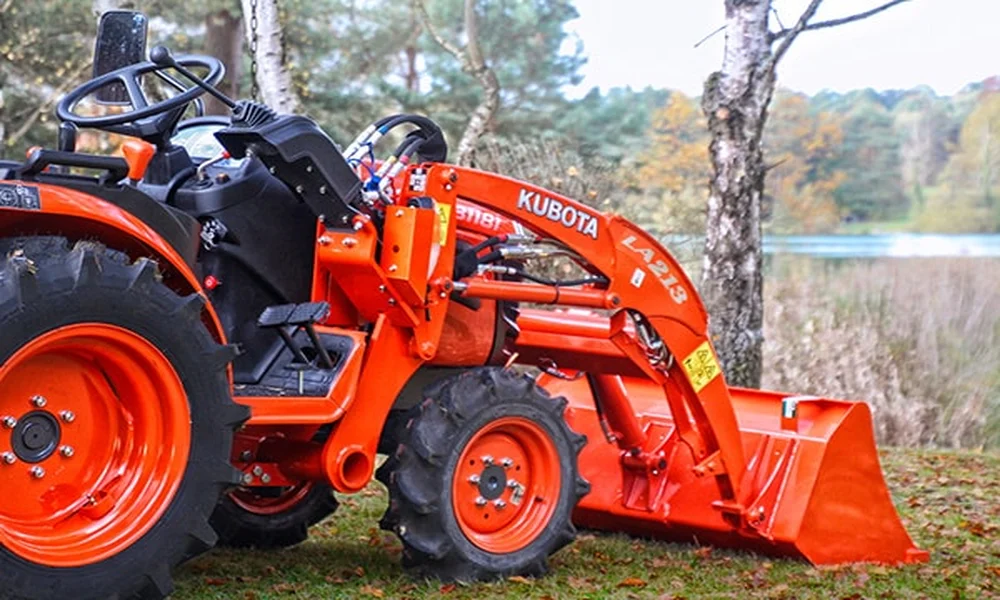

Compact tractors are useful on farms, smallholdings, nurseries, orchards, and sites where a full-sized tractor would be difficult to handle. They can do a variety of maintenance and agricultural activities with sufficient capacity despite their modest size, which might make them useful for working in small areas. Comparing engine sizes is not enough to select the ideal small tractor, though. The equipment should be compatible with the operator’s practical needs, workload, attachments, and terrain.
Navigating narrow workspaces, tight entry points, and diverse property layouts requires equipment that offers high maneuverability without sacrificing raw utility, making specialized compact tractors an invaluable asset for smallholdings, orchards, and diversified farming operations.
2. ASSESS THE WORKING AREA
The tractor chosen should be influenced by the property’s dimensions and design. A machine with a tight turning radius and an appropriate overall width may be needed for narrow pathways, tiny fields, gates, buildings, and densely planted areas. When using a tractor between crops or over uneven terrain, ground clearance should also be considered. Prior to purchase, measuring entry points can help avoid issues down the road.
3. DETERMINE THE REQUIRED POWER
Compact tractors come in a variety of power levels, and the best one for the job depends on the requirements. Digging, hard tillage, or loader labour may need more energy than mowing, light cultivation, spraying, and material transportation. Instead of investing for capacity that might not be used frequently, farmers should determine the most difficult activity they routinely expect the tractor to complete and choose power appropriately.
4. CHECK ATTACHMENT COMPATIBILITY
Compact tractors may be made much more useful with attachments. Farmers could require a mower, loader, tiller, cultivator, trailer, post-hole digger or snow blade, depending on the type of operation. Examine the tractor’s three-point hitch, power take-off, hydraulic capacity, and lifting capability before making a purchase.
5. CONSIDER TRANSMISSION OPTIONS
Productivity and simplicity of use can both be impacted by gearbox selection. For simple fieldwork, some operators would like a manual gearbox, while others could find a hydrostatic system more practical for jobs needing frequent direction and speed adjustments. The choice should consider the nature of the work, operator background, and anticipated working conditions.
6. CONSIDER TOTAL OWNERSHIP COSTS
The initial outlay is just a portion of the total cost. The long-term cost may include fuel usage, insurance, service, tires, accessories, repairs, and finance. Farmers can choose a compact tractor that fits their budget after the initial purchase by comparing these costs.
7. CONCLUSION
Choosing a compact tractor necessitates careful consideration of the land, required power, attachments, gearbox, operator comfort, maintenance, and ownership expenses. A smaller computer can offer a great deal of flexibility, but only if the work it is supposed to do is compatible with its requirements. Farmers can choose a little tractor that will be practical, affordable, and manageable in the long run by evaluating their needs before making a purchase.